
End of Season Sale Australia: How to Find and Maximize Deals

Most advice about an end of season sale in Australia is backwards. “Wait until the final day for the biggest discount” sounds clever, but it often leaves you with damaged choice, missing sizes and colours nobody wanted. Buying the moment a sale launches isn't smarter either. The useful skill is reading the markdown cycle, then checking whether the advertised saving is genuine.
Australia's EOFY window usually runs from late May through 30 June, with some brands extending offers into early July. It has become a major national shopping moment, particularly for fashion, footwear and accessories, but the strongest purchase depends on what you're buying and how much stock you can tolerate losing. (CHOICE's guide to Australian sale periods)
Table of Contents
- Why Timing Beats Price During End of Season Sale Australia
- Mapping the End of Season Sale Australia Calendar
- How to Use Collection Links and Alerts Effectively
- Verifying Authenticity and Discount Value
- Mastering Sizing and Return Strategies
- Optimizing Payment and Delivery Options
- Last-Minute Bargain Tactics
Why Timing Beats Price During End of Season Sale Australia
The lowest ticket price isn't always the best deal. For a popular jacket, an everyday sneaker or a versatile knit, availability has value. A slightly smaller markdown on the right size and useful colour can beat a dramatic final reduction on an item you'll never wear.
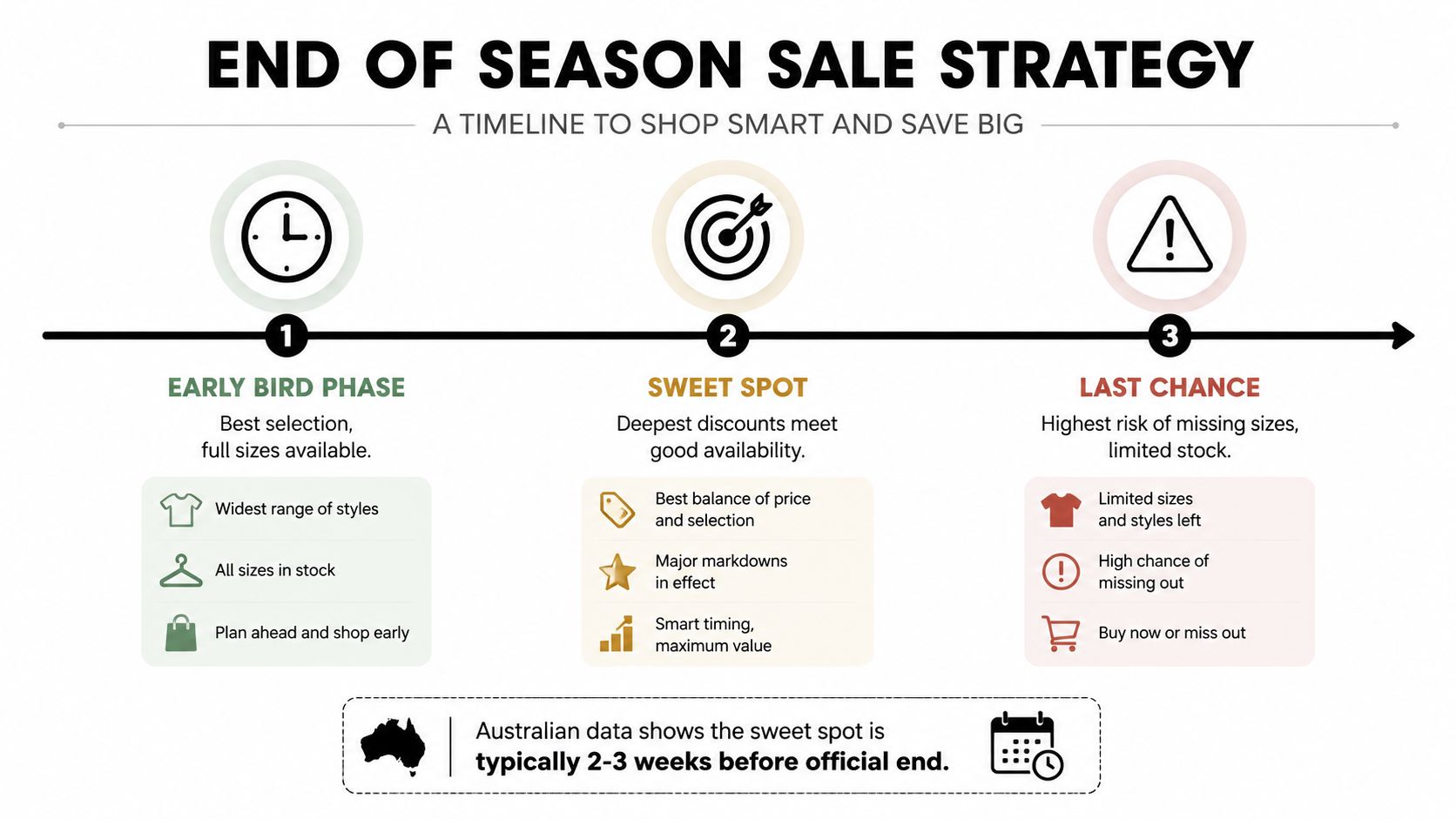
Australian retailers generally work through a two-phase markdown structure. The first phase is the early-bird period, when a sale opens and brands test demand. Selection is strongest, full size runs are more likely and the discount may be restrained. The second phase arrives when remaining stock needs to move, bringing deeper reductions on selected lines rather than an automatic cut across the entire site.
The practical buying window
The best compromise is the sweet spot, when the retailer has reduced prices further but hasn't exhausted the most useful stock. You should shop for items with flexible sizing, common colours or broad availability. If you want a specific designer style, unusual size or limited colour, buy earlier.
EOFY matters because it compresses demand into a recognised deadline. A projected 6.1 million Australians, or 26% of the population, were expected to shop during EOFY sales in 2026, with forecast spending of $10.7 billion, according to Roy Morgan's EOFY 2026 forecast. Clothing, footwear and accessories led planned categories at 34%, ahead of household appliances and white goods at 15%, and electronics and technology at 12%.
Practical rule: Decide whether you value the item more than the final markdown. If you do, don't gamble on the last clearance wave.
Australia's promotion-heavy retail environment makes this discipline more important. An ACCC-commissioned behavioural report found that the share of products sold on promotion rose from 30% to 40% over eight years. (ACCC behavioural insights report) A blanket sale can create urgency, but it doesn't prove that every product has exceptional value.
Mapping the End of Season Sale Australia Calendar
A sale calendar is useful only when it matches the stock retailers are trying to clear. Australian fashion follows a seasonal rhythm, with summer clearance commonly peaking in March to April, winter clearance in August to September, and EOFY adding a late-June layer. Strong end-of-season windows commonly reach about 20% to 50% off list prices, although the exact reduction depends on the label, category and remaining inventory. (ShopBack's fashion savings guide)
Read the calendar by category
Start with the season that is leaving, not the date printed on the campaign.
- Late summer into autumn: Look for swimwear, warm-weather dresses, sandals and lightweight accessories. Selection can disappear quickly in popular sizes, so buy earlier if the item is a wardrobe staple rather than a speculative purchase.
- Late May and early June: EOFY activity begins before 30 June, often with early offers on fashion, footwear and accessories. This is the sensible point to watch winter layers, workwear and transitional pieces.
- Mid to late June: Retailers become more selective with reductions as they assess sell-through. This is usually the strongest hunting period for styles with broad sizing and leftover seasonal colours.
- August to September: Winter clearance typically becomes more aggressive. Coats, knitwear and heavier layers may deliver value, but the best sizes and most versatile colours are more exposed to sell-out.
- Early July: Some EOFY promotions continue beyond the financial-year deadline, but don't assume every retailer will extend. Treat this as a last-chance window, not the main plan.
A product such as the 132 Fashion Tilly Wool Blend Crew Neck Knit (Powder Blue) fits the winter and transitional-weather logic: it has a relaxed silhouette, drop-shoulder sleeves, contrasting winter white ribbed trims and a 65% acrylic, 35% wool composition. The listed snapshot describes it as lightweight, warm and suitable for layering, with S/M corresponding to AU 10-12 and M/L to AU 12-14.
For a retailer-by-retailer view of launch patterns and EOFY timing, use this Australian end-of-financial-year sales guide as a planning reference, then confirm dates and exclusions on the seller's own page.
Prioritise stock-clearing categories
The deepest cuts often gather around leftover sizes, selected labels and seasonal lines, not every item on a homepage. Fashion spending can remain volatile, with clothing, footwear and accessories sales moving from A$3.09 billion in May 2025 to A$4.08 billion in August 2025, after April's slump, as reported by Ragtrader. That movement reinforces the point: timing changes the opportunity, but category and inventory determine whether the deal is worthwhile.
How to Use Collection Links and Alerts Effectively
Sale browsing goes wrong when you treat the entire internet as your shopping list. Open a homepage, see several red banners and start rationalising purchases you hadn't planned to make. A better system is to build a narrow feed around categories, brands and products you already understand.
Collection links are useful because they take you directly to a curated group rather than forcing you through every department. Start with one collection for the item you need, such as dresses, footwear, knitwear or bags. Create a second collection for brands you trust. Keep them separate, because “winter coat” and “designer sale” answer different shopping questions.
Build a personal sale feed
Use this simple workflow:
- Write the target first. Record the item type, preferred fabric, acceptable colours and your size before you browse. “A winter layer I can wear to work” is more useful than “something on sale”.
- Filter by category. Narrow the search to the collection that matches the target. Collection links help you avoid unrelated promotions and reduce the temptation to fill a cart.
- Check brands selectively. If you know a label's fit and quality, add it to your watch list. A familiar cut is easier to assess than a dramatic discount from an unknown seller.
- Use alerts as prompts, not commands. Email notifications can tell you when new offers appear, but they shouldn't override your budget or return requirements.
- Compare the final checkout cost. A headline reduction can lose its appeal once delivery, exclusions or return conditions are included.
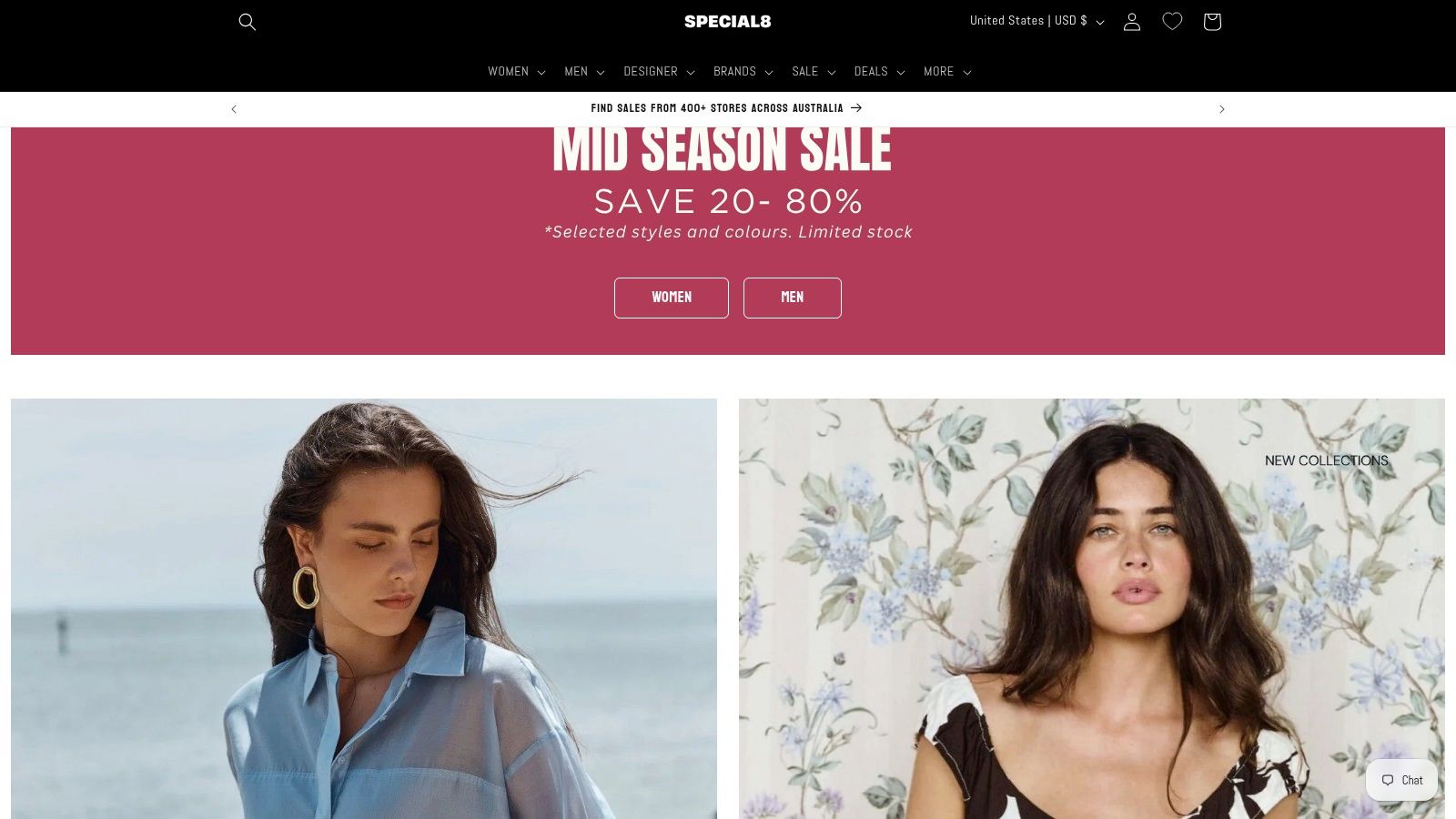
Special8 aggregates fashion, footwear, accessories, jewellery and lifestyle offers from 230+ stores nationwide, with deals updated daily. Its category, brand and sale-event browsing can work as a discovery layer, while the retailer remains the place to verify product details, payment and returns.
For shoppers who use codes alongside sale pricing, read this practical guide to online shopping discount codes before assuming every promotion stacks. Retailers often limit codes, exclude marked-down items or apply a threshold, so the checkout total is the only figure that matters.
Shopping discipline: An alert should bring a planned product to your attention. It shouldn't create a reason to buy an unplanned one.
Verifying Authenticity and Discount Value
A sale label isn't evidence of value. Before paying, compare the current price with the retailer's own product history where available, inspect whether the reduction applies to the exact colour and size, and read the words around the offer. “Selected styles”, “prices as marked” and “online and selected stores” all narrow what the headline promises.
The adidas Australia End of Season Sale provides a useful example of clear mechanics. Its page states up to 40% off selected styles, identifies prices as marked and says availability is online and in selected stores. (adidas Australia's End of Season Sale terms) The important phrase is “up to”. It doesn't mean every product carries the maximum reduction.
Test the deal before you trust it
Ask four questions:
- What is reduced? Check the product page, not only the campaign banner.
- What was the comparison price? Look for a credible list price and be cautious if the reference price is unclear.
- Are there exclusions? Final sale, selected collections and store-specific availability can change the value.
- Can you return it? A low price is less attractive when an unsuitable item can't be exchanged or refunded.
Threshold offers need the same scrutiny. Australian sale roundups have included 30% off bedding bundles and 15% off everything else from Bed Threads, extra 30% off one Final Sale item or 40% off two or more Final Sale items from Le Specs, and up to 40% off cookware and bundles from our Place through 30 June. (Frankie's EOFY sale roundup)
Use this designer sale guide to discover offers, then validate each deal on the brand's page. The strongest signal is a transparent product-level price, clear conditions and a purchase you would have made without the red banner.
Mastering Sizing and Return Strategies
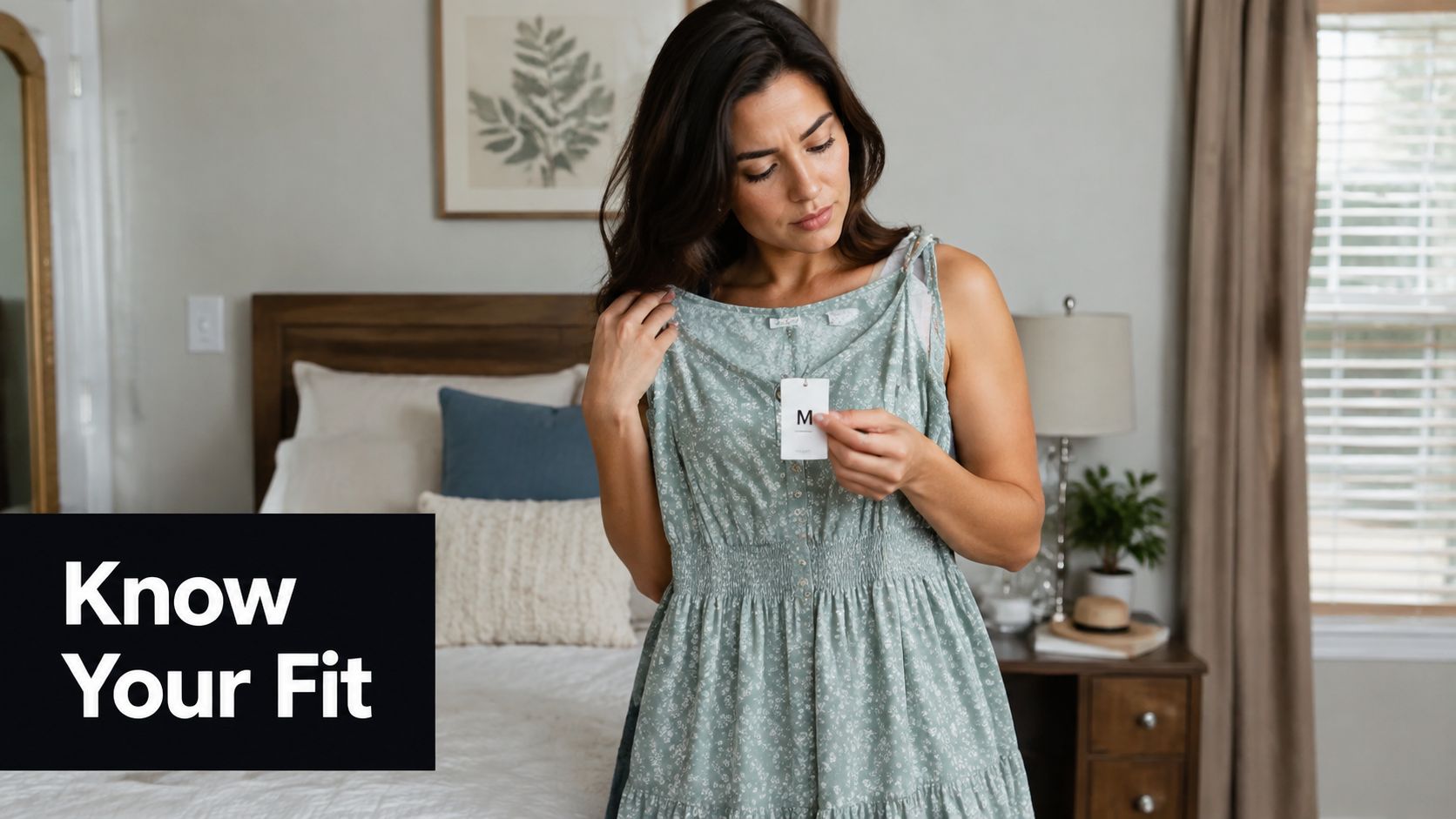
Discounted fashion removes some of the safety margin from shopping. Your preferred size may be gone, the item may be final sale, or a relaxed cut may fit differently from the label's standard measurements. Don't use the discount to excuse a poor fit decision.
Compare the garment's measurements with something you already own and wear. For knitwear, judge whether the shoulder and body shape suit the intended layering. A relaxed design can accommodate more styling options, but sizing up may turn an easy silhouette into unnecessary bulk.
Make the return policy part of the price
Before checkout, identify three things:
- Return eligibility: Check whether sale items, outlet lines and final-sale products can be returned or exchanged.
- Time limit: Note the return period and whether the countdown begins at purchase or delivery.
- Return cost: Confirm whether you pay postage, whether the retailer supplies a label and whether the original delivery charge is refundable.
The clothes measurement guide is useful when a product page gives measurements rather than a simple AU size. Measure consistently, use the same garment type for comparison and record the result before you start browsing.
Payment and delivery can affect the decision too. A card or PayPal may offer a different dispute pathway from a buy now, pay later service, while split payments can make an expensive cart feel harmless without changing its total cost. Choose the method that gives you a clear record and doesn't encourage you to add another item merely to spread the payment.
Fit rule: If you can't explain how you'll resolve a bad fit before buying, the markdown isn't finished. Your risk is still part of the price.
Optimizing Payment and Delivery Options
The final cost is the checkout total, not the crossed-out product price. Delivery fees, collection requirements, payment timing and return postage can change which offer wins when two retailers sell comparable items.
Consider a last-minute EOFY shopper choosing between a single marked-down jacket from one retailer and a slightly less reduced jacket from another. The first retailer offers a delivery fee that makes the basket more expensive. The second offers click and collect, but the shopper has to confirm store stock and collect within the stated window. The better choice depends on the complete route from checkout to wardrobe.
Compare the transaction, not just the promotion
| Option | Check before paying | Why it matters |
|---|---|---|
| Card payment | Final total and order confirmation | Gives you a straightforward purchase record |
| PayPal or similar wallet | Currency, delivery and dispute details | Adds a separate payment account to monitor |
| Buy now, pay later | Instalment schedule and exclusions | Splits payments but doesn't reduce the price |
| Standard delivery | Cost, estimated timing and tracking | May be sensible when the sale still has time to run |
| Express delivery | Surcharge and service availability | Can protect a deadline, but may erase the saving |
| Click and collect | Store stock, collection window and ID rules | Can remove delivery charges if the location suits you |
Check whether a free-delivery threshold requires a second item. If the extra purchase wasn't already on your list, you haven't saved shipping. You've increased the order.
For a clear explanation of store collection logistics, consult this click and collect guide. Delivery pages also matter during busy campaigns, because an offer may remain live while dispatch takes longer than usual.
Don't wait until the last checkout screen to discover that the colour is unavailable for collection or that express service isn't offered to your postcode. Put the item in the cart, select the delivery method and inspect the total before deciding whether urgency is justified.
Last-Minute Bargain Tactics
The final hours reward preparation, not panic. At this stage, look for selected seasonal stock, flexible colours and products with a forgiving fit. Don't chase a headline percentage if the remaining item fails your fabric, sizing or return checks.
Use a short final checklist:
- Confirm the exact item: Product page, colour, size and seller should match your plan.
- Read the restriction: Check selected styles, final sale and return wording.
- Recalculate the total: Include delivery and any payment-related cost.
- Choose the safest fit: A familiar cut is a better last-minute purchase than an experimental one.
- Stop after the target: A countdown timer isn't a reason to add a second item.
EOFY promotions commonly start in late May and can finish between 29 June and 6 July, depending on the retailer. (Style Magazines' Australian EOFY roundup) That variation means the official end date isn't always the moment of maximum value. If your target is still available and the terms are clear, buy it. If you're only browsing for a dramatic final cut, walk away.
The smartest late shopper also checks whether a sale is truly clearing stock or just rotating promotional language. A smaller reduction on a useful, returnable piece is a win. A deeper reduction on the wrong size is an expensive mistake wearing a discount badge.
Use Special8 to track Australian fashion, footwear, accessory and lifestyle offers by category, brand and sale event. Visit the site before your next EOFY or end-of-season purchase, save the collections that match your list and verify the final deal with the retailer before checkout.


