
Summer Dresses on Sale Australia: 2026 Deals

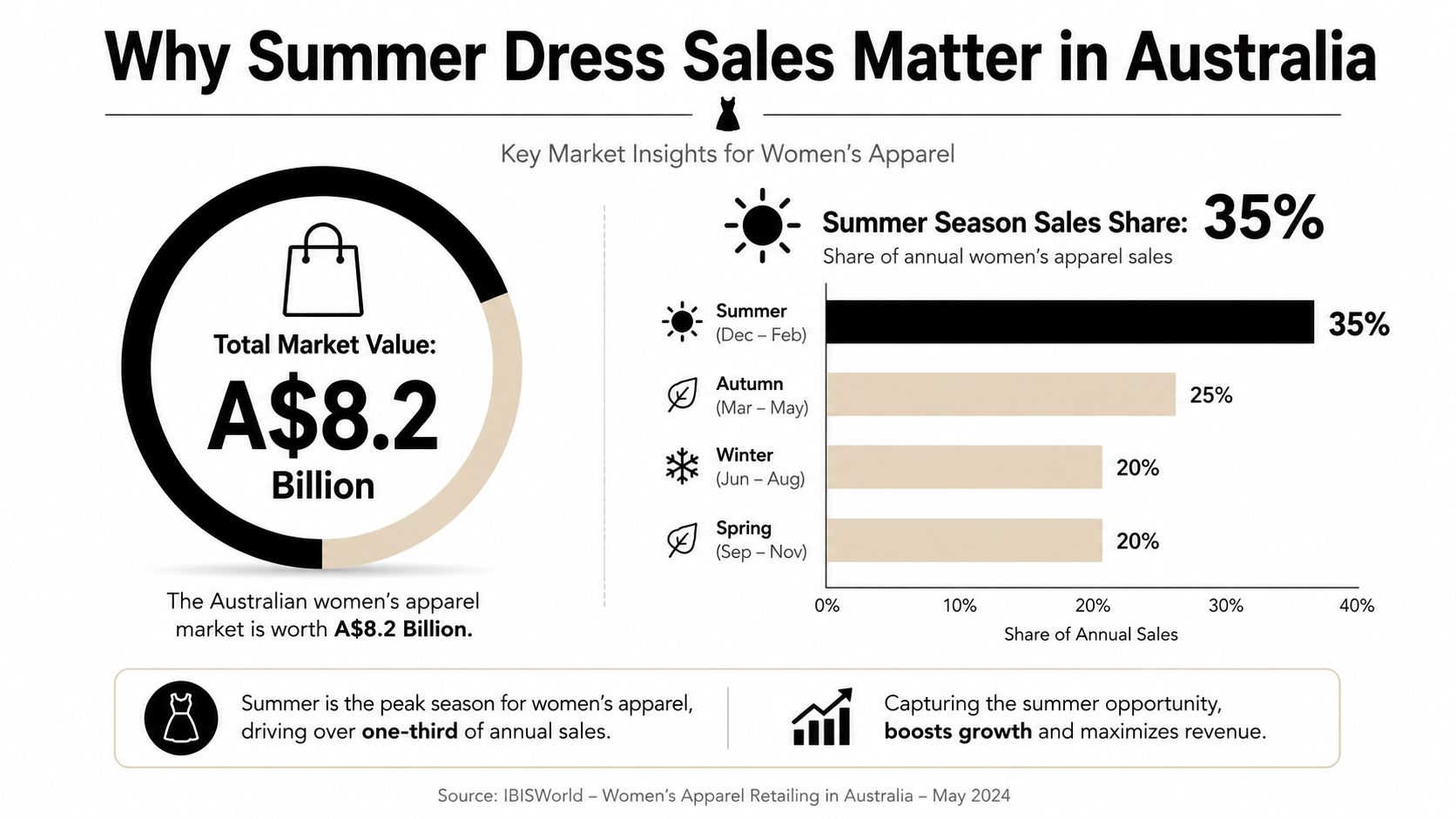
A$18.2 billion is the estimated size of Australia's women's apparel market in 2024, and it's projected to rise towards the 2029 forecast period, according to Statista's Australian women's apparel market outlook. That scale makes summer dresses on sale in Australia more than a pleasant browsing opportunity. It creates a predictable retail cycle where timing, fabric choice and fit knowledge can save you from paying full price for a dress that'll be marked down later.
The smartest approach is simple. Buy early only when you need a specific size or occasion piece. Otherwise, wait for Boxing Day and late-summer clearance windows, compare retailers carefully, and judge a dress by how often you'll wear it rather than how dramatic the markdown looks.
Table of Contents
- Why Summer Dress Sales Matter in Australia
- The Australian Sale Calendar for Summer Dresses
- Where to Shop for the Best Summer Dress Deals
- Choosing Fabrics and Fits That Work for Australian Summers
- Using Special8 to Find Your Perfect Summer Dress Deals
- Maximising Your Savings with Smart Shopping Tactics
- Real Summer Outfit Ideas from Current Sale Finds
Why Summer Dress Sales Matter in Australia
Summer dresses benefit from one of Australia's clearest retail cycles. They cover everyday wear, holidays, events and warm-weather basics, so retailers stock heavily before demand peaks. Once the season moves on, those same dresses become space that stores need to clear.
The result is a predictable shift in value. Early-season shoppers get the widest choice of colours, sizes and styles. Later shoppers usually get sharper discounts, but must accept fewer options. Buy at full price only when the fit, fabric or occasion makes the dress worth securing immediately.
Why the markdown cycle is predictable
Retailers usually begin reducing summer stock after the main holiday shopping period. Boxing Day promotions can place summer dresses in the 40% to 60% discount range, while leftover inventory may fall by 50% to 70% in late February and early March, according to ShopBack's Australia-focused seasonal sales analysis.
The reason is practical. At the start of summer, stores prioritise selling fresh ranges while demand is strong. Later, they need to turn unsold stock into cash and create room for incoming seasonal clothing. That is why late clearance prices can beat earlier promotions, although popular sizes and versatile colours may already be gone.
Retail spending patterns support this broader seasonal movement. Australian Bureau of Statistics retail data recorded clothing, footwear and personal accessory retailing at A$3.03 billion in June 2026, up 3.87% year on year. The same ABS-linked commentary reported a 1.5% single-month rise in the broader June 2025 series, equal to A$47.0 million, while ABS seasonality research showed the clothing retailing seasonal pattern index rising from 1.04 to 1.16 across the published series.
A low price alone proves little. The strongest purchases usually come from seasonal clearance, when retailers are solving an inventory problem rather than advertising a new collection. Judge the dress by its fabric, construction, fit and likely wear count before judging the markdown.
The Australian Sale Calendar for Summer Dresses
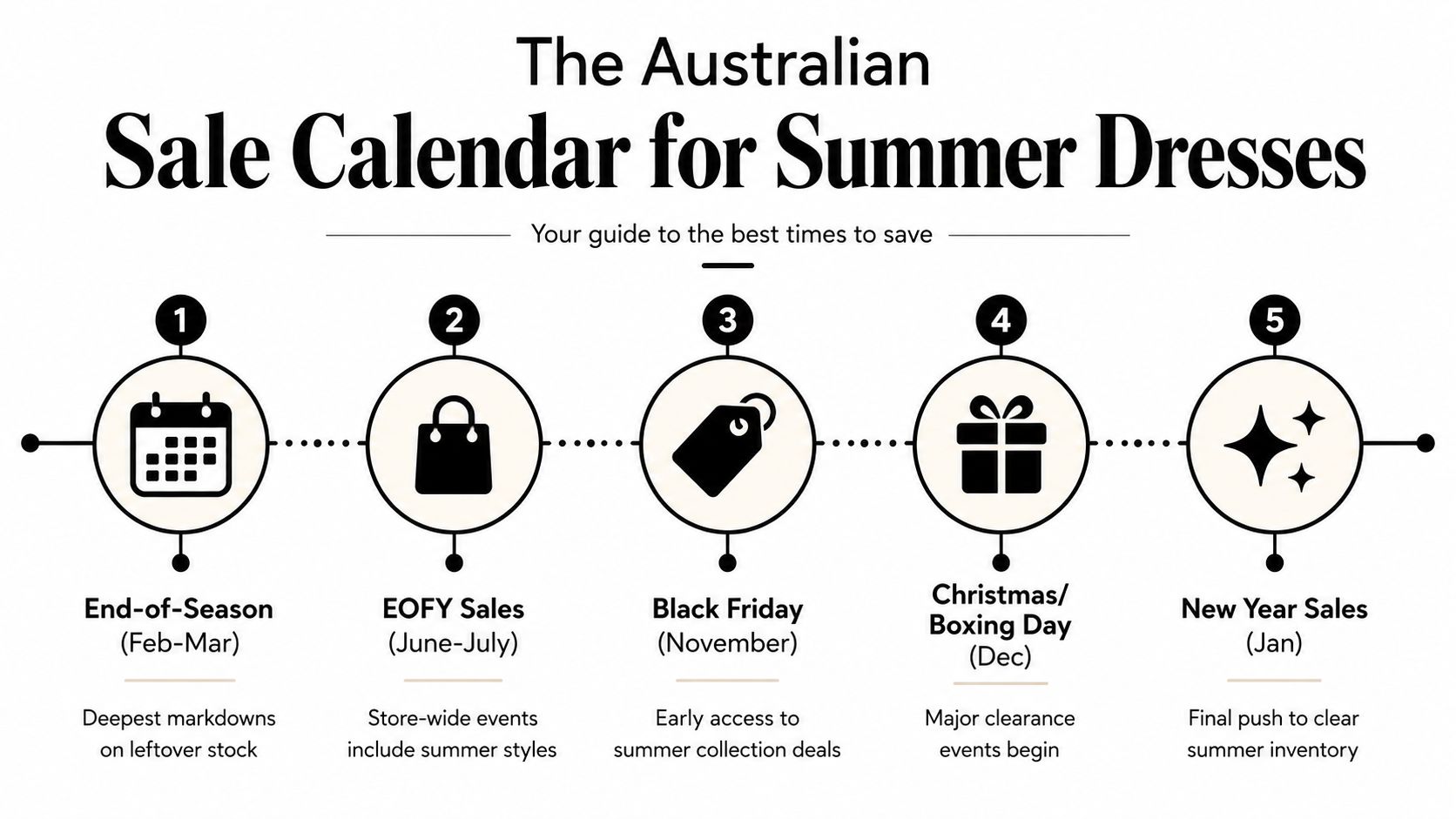
Treat the calendar as a buying plan rather than a list of dates. Retailers usually move from full-price launches to broad promotional events, then to increasingly urgent clearance. Your best window depends on whether you want a particular size, a versatile wardrobe staple or the lowest possible price.
The buying windows that matter
October and November are usually poor value for basics. The 2026 Australia-focused retail analysis describes these months as the worst-value period for summer basics because stock is still at full price while demand is rising, as reported by ShopBack's seasonal sales guide. Buy then only if the dress solves an immediate need or has a fit and colour you're unlikely to find later.
Black Friday can offer an early opportunity. Look for promotions on summer collections, but read the terms carefully. A site-wide banner may exclude selected labels, new arrivals or already reduced items.
Christmas and Boxing Day begin the serious clearance phase. Boxing Day commonly brings 40% to 60% summer-clearance discounts, according to ShopBack's Australia sale timing analysis. This is the best compromise between selection and price. You'll often find enough choice to compare silhouettes without waiting until only unpopular sizes and colours remain.
January is the second pass. New Year promotions push more summer stock into clearance. Check whether the retailer has reduced the same item again, but don't assume every January banner beats Boxing Day pricing.
Late February to early March is the lowest-price window. Residual summer inventory can reach 50% to 70% off, according to ShopBack's retail analysis. Patience pays, provided you're comfortable with limited sizing and less choice.
Use the calendar with a shopping deadline
If you're shopping for a holiday, wedding or festival, start by deciding whether the dress must be a precise style or needs to perform well. A flexible shopper can wait for Boxing Day or late-season reductions. Someone chasing a particular size should monitor the item earlier and accept that waiting may mean losing it.
For a practical example, the 132 Fashion Spicy Margarita Tie Shirt Dress (White/Red/Cobalt Multi) has a button-through front, adjustable tie waist, elbow-length tie-detail sleeves, side pockets and a knee-to-midi length. Its 100% viscose fabric and relaxed, true-to-size fit make it the kind of colourful travel or occasion style worth evaluating against your calendar, rather than buying solely because a sale label appears.
For broader timing ideas, this guide to women's clothing sales in Australia can help you track recurring promotional periods without treating every event as equally valuable.
Where to Shop for the Best Summer Dress Deals
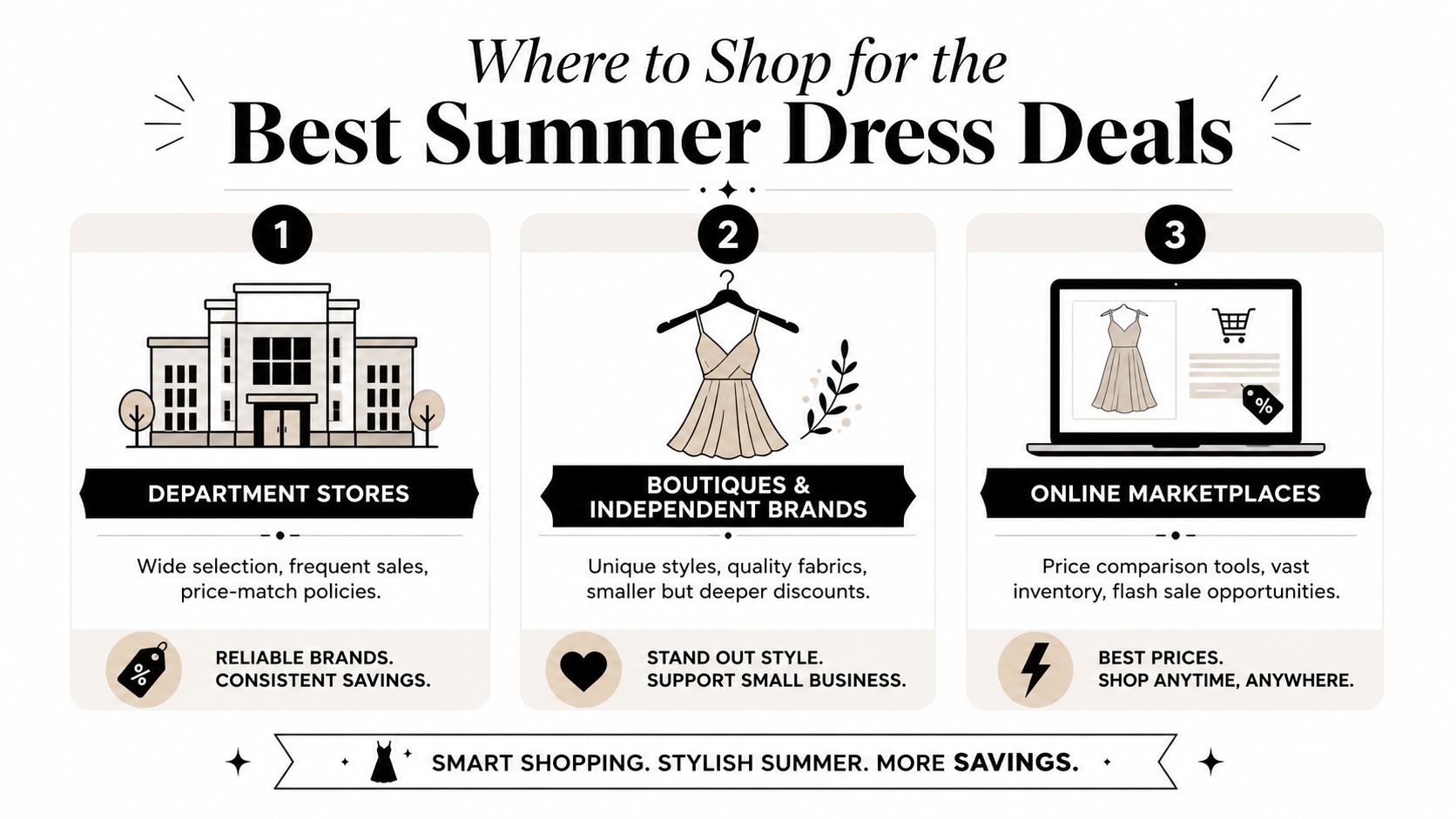
The right retailer depends on what you value most. Department stores provide breadth and brand comparison. Boutiques can offer more distinctive cuts and fabrics, but their stock depth may be narrower. Online marketplaces make price checking fast, though product photography and returns deserve closer attention.
Department stores
Department stores are the most useful starting point when you want to compare labels in one place. Myer, for example, lists over 4,000 dresses across 80+ brands and allows shoppers to check real-time store stock by suburb or postcode, according to Myer's dress collection. That combination helps when you want to inspect a fit in person or locate a remaining size without opening multiple retailer sites.
Myer's 2024 summer sale also shows how these campaigns work. The promotion advertised up to 40% off women's fashion, with many apparel brands reduced by 25% to 40%, and some offers reaching 50% off, according to Myer's summer sale announcement. Those figures apply to that advertised campaign, not every dress in the store, so check the individual product page before treating the headline as your expected saving.
Boutiques and independent brands
Boutiques suit shoppers who care about print, construction and a less generic silhouette. Their sales may be smaller in range, but the markdown can be meaningful when a retailer needs to clear a seasonal capsule. The trade-off is that you may have less sizing depth and fewer opportunities to compare an identical style across stores.
Read the return policy before paying. Sale conditions can differ, and a low price doesn't compensate for a difficult return process if the dress arrives with an uncertain fit.
Online marketplaces and multi-store discovery
Online marketplaces work well for shoppers who already know their measurements and want to compare prices quickly. Filter by size, colour and fabric first, then inspect delivery terms, returns and the date of the promotion.
A focused guide to sale dresses online in Australia can also help you narrow the search before you start comparing individual products. The aim isn't to visit every sale page. It's to find the few retailers whose stock, sizing support and return rules match your priorities.
Choosing Fabrics and Fits That Work for Australian Summers
A cheap dress that traps heat, clings in humidity or needs constant adjustment isn't a bargain. Australian summers vary widely, so choose for the conditions where you'll wear the dress, not just for the product photograph.
Start with the fabric
For hot, humid coastal conditions, prioritise lighter fabrics with an easy drape and enough room for air movement. Cotton is a practical choice for everyday wear because it feels breathable and handles repeated use, while viscose can offer a fluid shape that works well for lunches, travel and evening plans. Check the care instructions before buying. A dress that requires delicate handling may deliver less value than a simpler piece you can wash easily.
In hot inland conditions, loose silhouettes and lighter construction matter more than a heavily layered skirt or close-fitting bodice. For air-conditioned venues, elbow-length sleeves, a shirt-dress shape or a lightweight outer layer can make the same summer dress useful beyond the hottest part of the day.
Climate rule: choose the fabric first, then the trend. A breathable dress with a forgiving fit will earn more wears than a dramatic style you avoid in real heat.
Judge the fit before checkout
Sale shopping leaves less room for mistakes, especially when a retailer excludes reduced items from standard returns. Use the garment measurements when they're available, and compare them with a dress you already own rather than relying only on a familiar size label.
Pay close attention to:
- Bust and armholes: check whether the neckline works with the bra you normally wear and whether the armhole looks restrictive.
- Waist placement: a tie waist gives you more adjustment than a fixed seam, but it still needs enough room to sit comfortably.
- Length: product images can make a hem appear shorter or longer depending on the model's height and footwear.
- Fabric behaviour: look for whether the material is described as structured, fluid, lightweight or relaxed, then match that description to the silhouette.
If you need a more reliable starting point, use this guide to measuring for clothes before opening the sale tab. Measure once, save the results and compare them with each product's size chart. That small step reduces guesswork when the nearest store isn't convenient.
Using Special8 to Find Your Perfect Summer Dress Deals
Sale hunting becomes much easier when you stop checking every retailer manually. Special8 aggregates offers from 230+ Australian retailers, allowing shoppers to browse fashion promotions by category, brand or sale event. Its listings cover dresses alongside footwear, accessories, jewellery and lifestyle products, so you can focus on the type of purchase you're planning.
Build a narrower search
Start with the dress category, then filter by the details that matter before you get distracted by a low price. Size should come first. After that, use price range, brand and sale event filters to reduce the number of irrelevant results.
Brand pages are useful for pattern recognition. If a label repeatedly appears during particular seasonal events, you can make a note of that timing and avoid buying at full price unless the piece is time-sensitive.
Special8 also highlights featured deals and ending-soon alerts. Those alerts are most useful when you've already decided what you want. A notification can prompt you to check a known style, but it shouldn't turn an unsuitable dress into an impulse purchase.
Use alerts instead of constant checking
Email sign-ups can keep you informed when new promotions appear, while social updates provide another way to spot limited-time offers. Set alerts around your preferred brands and use the sale calendar to judge whether the promotion is likely to be an early-season event or a genuine clearance.
The practical workflow is short:
- Save your measurements: keep your bust, waist and hip measurements available.
- Choose your use case: decide whether you need everyday wear, holiday dressing or eventwear.
- Filter the range: narrow by size, price, brand and sale event.
- Check the retailer: confirm fabric, fit notes, delivery and return conditions.
- Compare the timing: ask whether you're buying before the deeper clearance windows described earlier.
For more browsing routes, this guide to online clothing sales in Australia points shoppers towards sale discovery without requiring a separate search across every store.
Maximising Your Savings with Smart Shopping Tactics
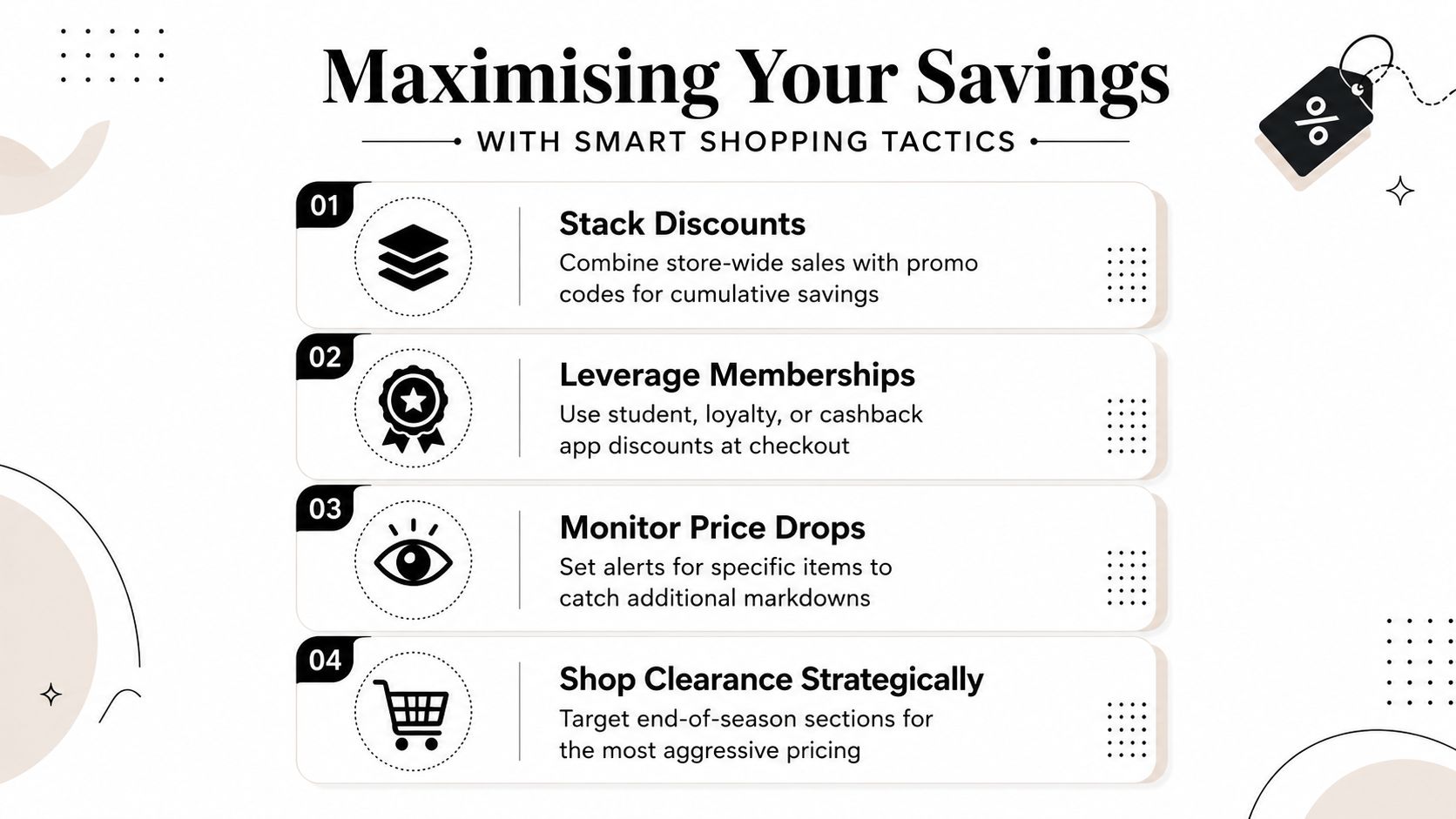
A markdown is only the first layer of value. The strongest purchase combines a suitable dress, a favourable sale window and any legitimate benefit you're already entitled to use.
Stack only what the retailer permits
Check whether the store accepts a promo code on sale merchandise before assuming discounts can be combined. Some retailers allow a code on selected products, while others exclude clearance, specific brands or existing promotions.
Students should check for student pricing before checkout. Loyalty benefits, free-delivery thresholds and cashback apps can also change the final value, but calculate the result from the actual checkout total rather than the advertised headline.
Make price monitoring do the work
Save a product when you're interested but not ready to buy. If the price drops, you can reassess the item with better information. This works particularly well for a dress that has the right fabric and fit but hasn't yet reached the price you consider worthwhile.
Hidden clearance sections deserve a deliberate search. Retailers may separate final-sale products from the main dress category, and the lowest prices often come with narrower return rights or fewer sizes. Read those conditions before paying.
Value test: divide the cost mentally by the number of occasions you can name for the dress. A versatile piece for lunches, travel and evening plans can beat a cheaper dress that only works once.
Use online shopping discount codes as a final checkout check, not as the reason to buy. If the dress doesn't suit your climate, wardrobe or measurements, a further reduction only makes the wrong purchase cheaper.
Real Summer Outfit Ideas from Current Sale Finds
A good sale wardrobe starts with repeatable outfits. Take a colourful shirt dress with a tie waist and pockets. For daytime, wear it with flat sandals and a simple tote. For an evening booking, switch to wedges or dressier earrings. The same silhouette can work for travel when you add a wide-brimmed hat and keep the accessories light.
A cotton shirt dress offers another useful formula. Wear it on its own with sneakers for sightseeing, then add a removable waist tie and polished sandals for lunch. Over swimmers, it becomes a practical coastal layer, provided the fabric and fit feel comfortable in heat.
For an event dress, judge versatility before print. Ask whether you can wear it with flat shoes, whether the neckline works with your preferred undergarments and whether a lightweight layer makes it suitable for an air-conditioned venue. A dress that handles several settings is worth prioritising over a more dramatic markdown with no obvious second outing.
The final check is simple: can you name the next occasion, the shoes and at least one accessory before you buy? If you can, the dress has a place in your wardrobe. If you can't, leave it in the sale rail.
Special8 brings together fashion promotions, outlet markdowns and limited-time offers from 230+ Australian retailers, with browsing by category, brand and sale event. Visit Special8 to compare summer dress deals, set your search around the Australian sale calendar and catch relevant alerts before the right size disappears.


