
Watches Sale Guide: How to Spot Real Discounts

You're probably staring at three tabs right now, one for a fashion watch that looks cheap in a good way, one for a smartwatch with a shiny discount badge, and one pre-owned piece that suddenly feels a lot more achievable. That's the trap with a watches sale, the sticker price shouts louder than the actual cost of owning the thing.
Ignore the headline percentage for a minute. The better question is simple, which watch keeps its value, stays covered by warranty, and doesn't turn into a regret purchase after the novelty wears off?
Table of Contents
- Why Watch Sales Confuse Most Shoppers
- Three Watch Markets You Should Compare Before You Click Buy
- When Australian Watch Sales Drop Their Best Prices
- Where to Find Genuine Watch Discounts Online and In-Store
- How to Tell If a Watch Sale Price Is Genuine
- Authentication and Warranty Checks That Protect Your Watch Purchase
- Which Watch Category Deserves Your Sale Budget This Year
- Your Watch Sale Action Plan and Final Checklist
Why Watch Sales Confuse Most Shoppers
You can find a fashion watch marked half price, a smartwatch with a discount badge, and a pre-owned automatic on the same sale page. The prices look comparable. The ownership costs are not. A $299 fashion watch may spend more time in a drawer, need a battery change, and have little resale value, while a discounted smartwatch or certified pre-owned automatic can return value through daily use, serviceability, or resale.
Judge the purchase by total ownership value. In Sydney, for example, a quartz fashion piece worn for one season may cost less at checkout than a smartwatch with active warranty support. Once battery swaps, repairs, software support, and actual wear time enter the calculation, the higher-priced option can be the better buy.
The three markets behave differently. Fashion watches are mainly a styling purchase, smartwatches are tied to software and battery life, and pre-owned luxury depends heavily on condition, servicing, paperwork, and demand. A headline percentage cannot compare those costs fairly.
Practical rule: use the 90-day median price for that exact reference number as a useful benchmark, rather than treating the crossed-out RRP as proof of a genuine bargain.
Sale pages often create drama with an inflated reference price. Check the current price against comparable listings, then ask whether you would still buy the watch without the discount. If the answer is no, the markdown may be doing more work than the product.
A proper watches sale is a value check. Compare the price, ownership costs, warranty position, and likely resale before you pay.
Three Watch Markets You Should Compare Before You Click Buy
Australian watch sales split into three very different markets, and shoppers get burned when they compare them as if they're all the same product. They're not. A quartz fashion watch, a smartwatch, and a pre-owned luxury piece behave differently on price, warranty, and resale, so they need different buying rules.
Fashion watches
Fashion watches usually sit under the lower-to-mid retail range and lean heavily on quartz movements. Think labels like Fossil, Daniel Wellington, and Cluse. Sale discounts often look dramatic, but the genuine value is usually limited because these watches are bought for styling, not long-term ownership.
Smartwatches
Smartwatches from Apple, Garmin, and Samsung are a different animal. Genuine deals are often tied to launch cycles, bundle offers, or direct brand promotions, not massive permanent markdowns. The win here is utility, fitness, notifications, and software support, so even a modest discount can be worth more than a deeper cut on a disposable fashion piece.
Pre-owned luxury
Pre-owned luxury, including Rolex, Omega, Tudor, and Cartier, is where the most interesting sale maths lives. You're not just buying a watch, you're buying brand equity, serviceability, and resale liquidity. A smaller markdown on a strong reference can beat a bigger percentage discount on a weak new watch every time.
| Segment | Typical Price Range (AUD) | Average Genuine Sale Discount | Key Value Drivers | Main Watchdog Risk |
|---|---|---|---|---|
| Fashion | Lower to mid retail | Often large on paper | Style, quick rotation, impulse appeal | Inflated RRPs and weak resale |
| Smartwatch | Mid retail and above | Usually modest | Warranty, software support, daily utility | Old stock sold as current model |
| Pre-owned luxury | Wide range | Commonly moderate | Brand demand, service history, resale value | Authenticity and condition |
If you want a quick filter for entry-level fashion pieces, this guide to best watch brands under $500 is a sensible place to start, because it keeps the conversation anchored in actual value instead of sticker shock.
When Australian Watch Sales Drop Their Best Prices
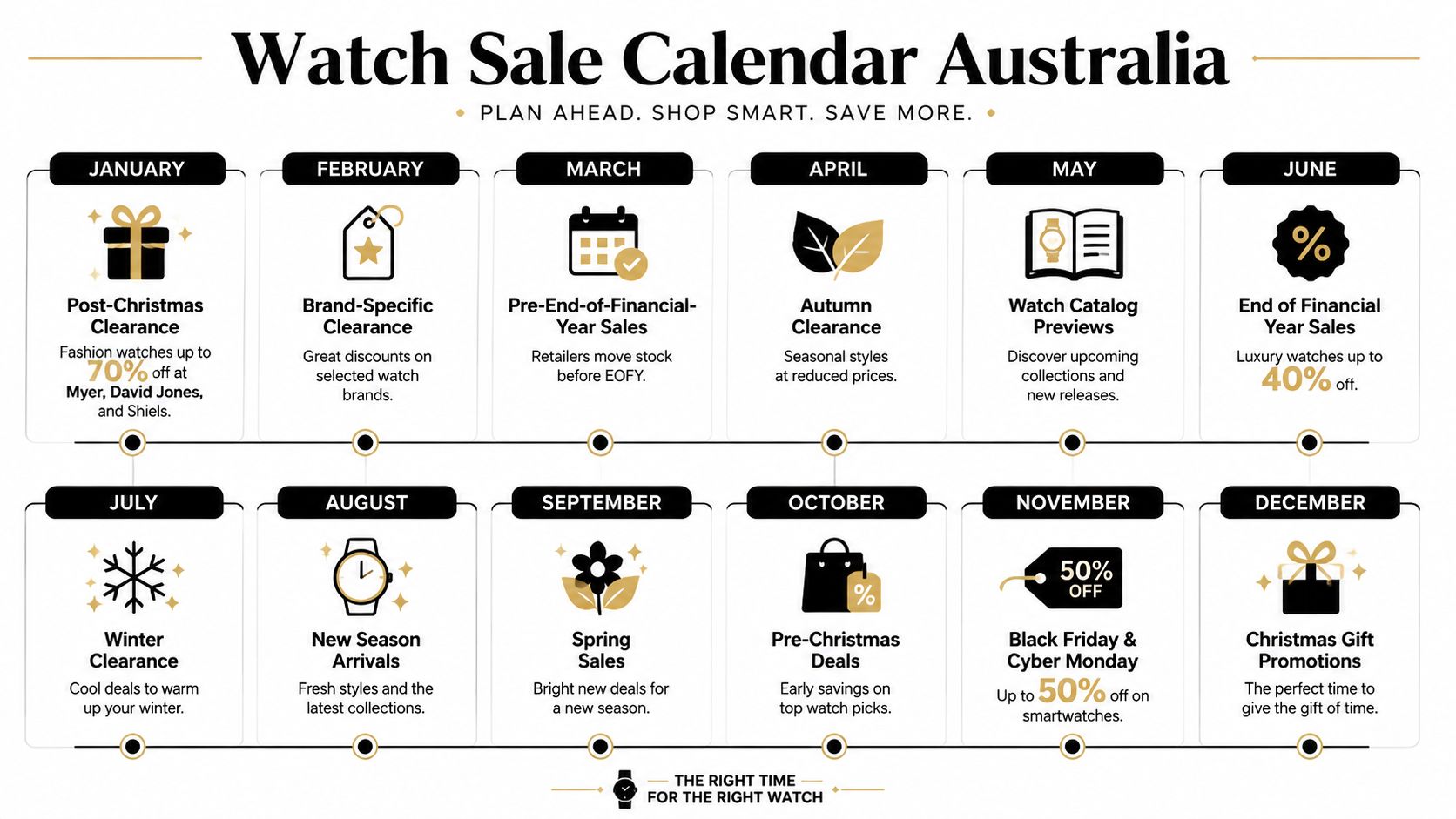
Australian watch discounts follow a clear pattern once you stop trusting gift-season hype. Retailers cut hardest when they need stock gone, not when the marketing calendar wants urgency. January clearance, EOFY, Black Friday, and Boxing Day do most of the work.
The months that matter most
January is the clean-up month for fashion watches, especially when Christmas stock sits unsold. EOFY in June is where smartwatch bundles and quieter pre-owned luxury reductions appear, because retailers are clearing ageing inventory and tidying their books. Black Friday in late November usually gives the sharpest smartwatch offers, while Boxing Day tends to deliver the deepest fashion cuts, though the good sizes and colours vanish quickly.
Some brand windows are worth tracking. TAG Heuer and Longines often refresh lines in March and September, which is when older references can move. Apple Watch launches usually trigger the biggest markdowns on the previous generation around September, and that is the moment to buy if you do not care about the newest case or chip.
Do not trust holiday “sale” labels blindly. Mother's Day, Father's Day, and Valentine's Day are often presentation windows, not true clearance events.
For a practical benchmark, watch the end of financial year sales in Australia instead of chasing emotional gift periods. That is where the cleaner pricing usually shows up.
Where to Find Genuine Watch Discounts Online and In-Store
The channel matters almost as much as the watch. Some sellers discount dead stock, some surface mispriced listings, and some price the item correctly from the start. If you know which channel suits which watch category, you stop wasting time on the wrong pages.
Outlet stores work best for fashion watches and cleared seasonal stock. You're dealing with leftovers from full-price ranges, so the warranty situation is usually cleaner, but the trade-off is selection. Size, colour, and model choice can be thin, and once the stock is gone, that's it.
Online aggregators like ShopStyle, PriceHipster, and Watchfinder are the easiest way to catch weirdly good listings across multiple retailers at once. They're strong for pre-owned luxury and end-of-line models, because they expose pricing gaps fast. The downside is wait time, especially when the seller is overseas and shipping stretches out.
Direct brand sales are the sharpest path for smartwatches and certain fashion labels. Seiko, Tissot, Garmin, Apple Refurbished, and Swatch often run their cleanest offers on their own sites, but those deals don't always stack with cashback or voucher codes. That's fine, because a real direct discount is usually cleaner than a fake multi-code mess.
| Channel | Best For | Typical Discount | Watch Out For |
|---|---|---|---|
| Outlet store | Fashion watches and cleared stock | Usually good on leftovers | Limited sizes and older colours |
| Online aggregator | Pre-owned luxury and price hunting | Varies by listing | Shipping delays and seller quality |
| Direct brand sale | Smartwatches and current-season models | Often strongest on single lines | Fewer stackable extras |
If you're comparing retail channels, the outlet shopping online Australia piece is worth keeping open in another tab. It aligns with the same logic, buy the channel that fits the stock, not the channel that sounds cheapest.
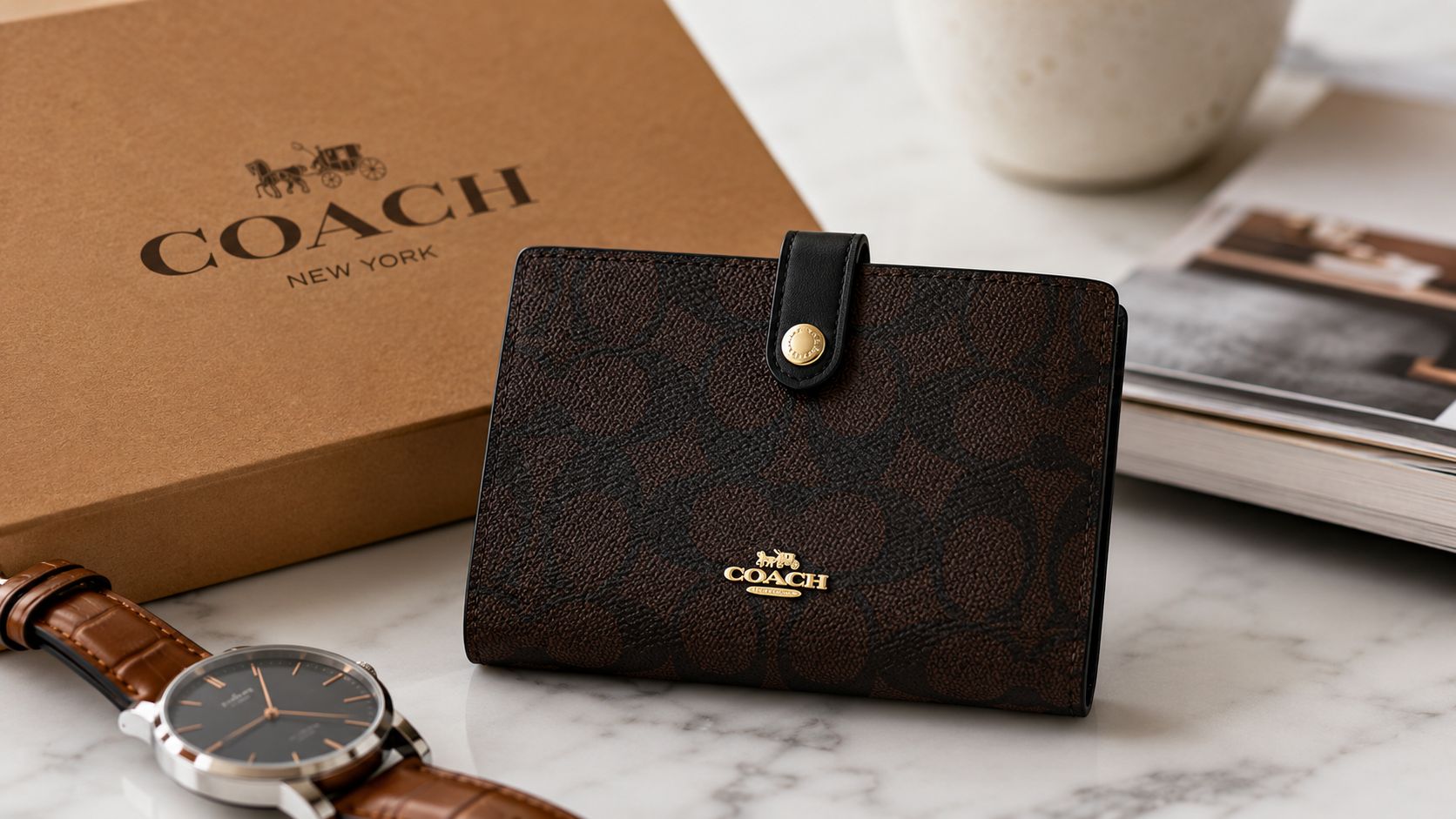
A useful reminder from the product world, not the watch world, is that outlet-style listings often bundle value through product structure rather than headline discount. The 2-In-1 Wallet In Blocked Signature Canvas (Im/Sand/Tan) is a good example of a carryover item with a removable card case, which is the sort of thing shoppers often see in outlet environments rather than fresh seasonal drops.
How to Tell If a Watch Sale Price Is Genuine
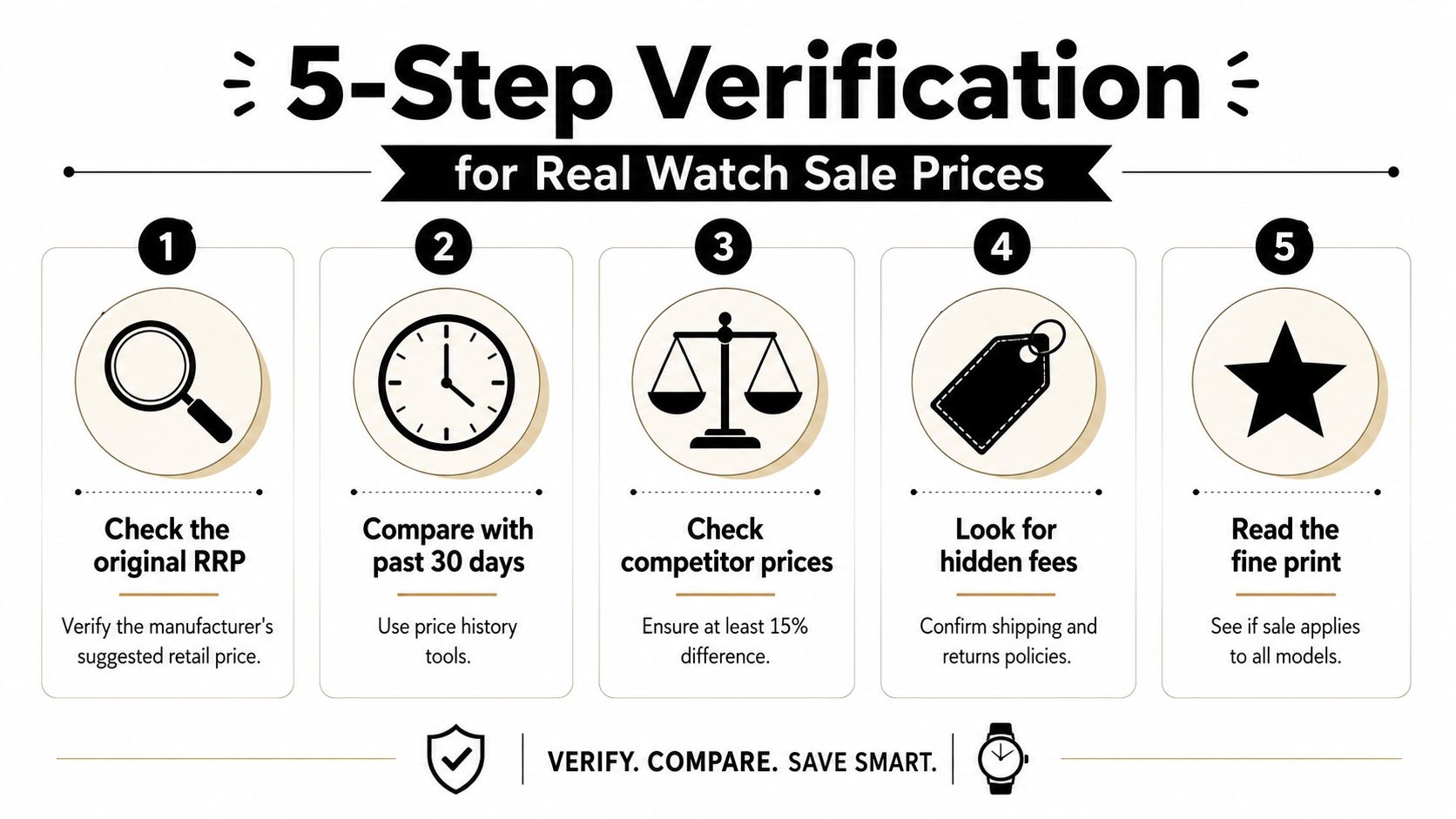
A watch marked down from an inflated reference price is not a saving. Check whether the old price was charged for a meaningful period. Use the retailer's archive, CamelCamelCamel, or PriceHipster to compare the listed RRP with earlier pricing.
Then compare the sale total with the lowest verified price across independent Australian retailers. Use documented listings or transaction history rather than an invented reference price. Add shipping and GST before judging the offer. The strongest discount also depends on the market: fashion watches are cheap to replace, smartwatches bring battery and software concerns, while pre-owned luxury watches require servicing and resale value checks.
The five checks that expose fake discounts
- Check the old price. If the was-price was barely used, ignore the percentage.
- Compare the full landed cost. Combine the watch, shipping, and tax.
- Scan the bundle. Free straps, vouchers, and warranty extensions may disguise a weak price.
- Confirm the reference number. Older or grey-market stock can carry a large markdown for a reason.
- Test cashback eligibility. ShopBack or Cashrewards may reduce the final cost if the listing qualifies.
If the offer only works after you ignore shipping, warranty, and the model number, reject it.
A genuine sale should survive a quick comparison in another tab. Apply the same discipline to retailer claims across categories, and use the price match guarantee discussion as a practical reference for checking prices against verifiable competing offers. For a fashion watch, the lowest upfront price may be enough. For a smartwatch, price in battery replacement and support. For pre-owned luxury, a smaller discount from a trusted seller can deliver stronger value once servicing, warranty, authentication, and resale are included.
Authentication and Warranty Checks That Protect Your Watch Purchase
A low price means little if the watch cannot be authenticated or supported after purchase. Check the paperwork against the category, because fashion, smart and pre-owned luxury watches carry different risks.
For fashion watches such as Fossil, Cluse or Daniel Wellington, match the caseback serial number with the warranty card. Confirm that the seller appears as an authorised stockist on the brand's Australian website. An unauthorised retailer may leave you without the manufacturer warranty, even when the packaging looks genuine.
Smartwatches require a different check. For Apple Watch, Garmin and Samsung, verify the serial number or IMEI through the brand's official registration system. Ask about refurbished status and battery health, then confirm the remaining support or warranty coverage. Australian Consumer Law still applies, but a product description may not explain the watch's full history.
Pre-owned luxury demands the strictest proof. For Rolex, Omega and Tag Heuer, require third-party authentication, service records and a practical return window. Our guide to designer sales in Australia explains the paperwork to expect. A seller who withholds documentation is offering risk, not a genuine bargain.
Use a credit card or PayPal Goods and Services where possible, so chargeback protection remains available if the watch arrives materially different from the listing. Photograph the watch before removing tags or protective seals. Once packaging is opened, useful evidence can disappear.
Category checks beat generic jewellery assumptions. The 15mm Half Round Hoop Earrings in 9kt Yellow Gold (Gold) has a straightforward materials-and-finish story. Watches contain moving parts, serial records and warranty conditions, so documentation affects the purchase price.
The rule is simple, authenticity is part of the price. If the seller cannot prove it, reject the discount.
Which Watch Category Deserves Your Sale Budget This Year
Fashion watches are only worth serious attention if your budget is tight or you want quick rotation for outfits. They're easy to buy, easy to replace, and easy to outgrow. That makes them useful, but not strong value when you compare them with what else you could buy for the same money.
Smartwatches win when you use the functions. If you want health tracking, notifications, and regular software support, a good smartwatch sale can be the right spend even if the discount looks modest compared with fashion markdowns. The ownership case is strongest when you'll wear it daily and the model is still within its support window.
Pre-owned luxury is where the best risk-adjusted value usually sits. You're paying for a known brand, a more durable resale market, and a piece that can hold attention long after the sale ends. That doesn't mean every luxury watch is smart to buy, but when the reference is right and the paperwork checks out, it's the category most likely to reward patience.
| Category | Typical Sale Saving | Ownership Cost / Year | Warranty Strength | Resale Value |
|---|---|---|---|---|
| Fashion | Often the biggest-looking markdown | Usually highest relative to value | Often weaker unless authorised | Usually soft |
| Smartwatch | Moderate | Can be justified by daily use | Strong when current and registered | Depends on model cycle |
| Pre-owned luxury | Often smaller on paper, stronger in reality | Lower regret if bought well | Varies, but can be solid with proof | Usually strongest |
If I had to be blunt, I'd put sale-day money into pre-owned luxury first, smartwatches second, and fashion watches last. The exception is obvious, if you need a cheap style fix, buy the fashion piece and move on. If you want a watch that makes sense after the checkout high fades, go where value survives scrutiny.
Your Watch Sale Action Plan and Final Checklist
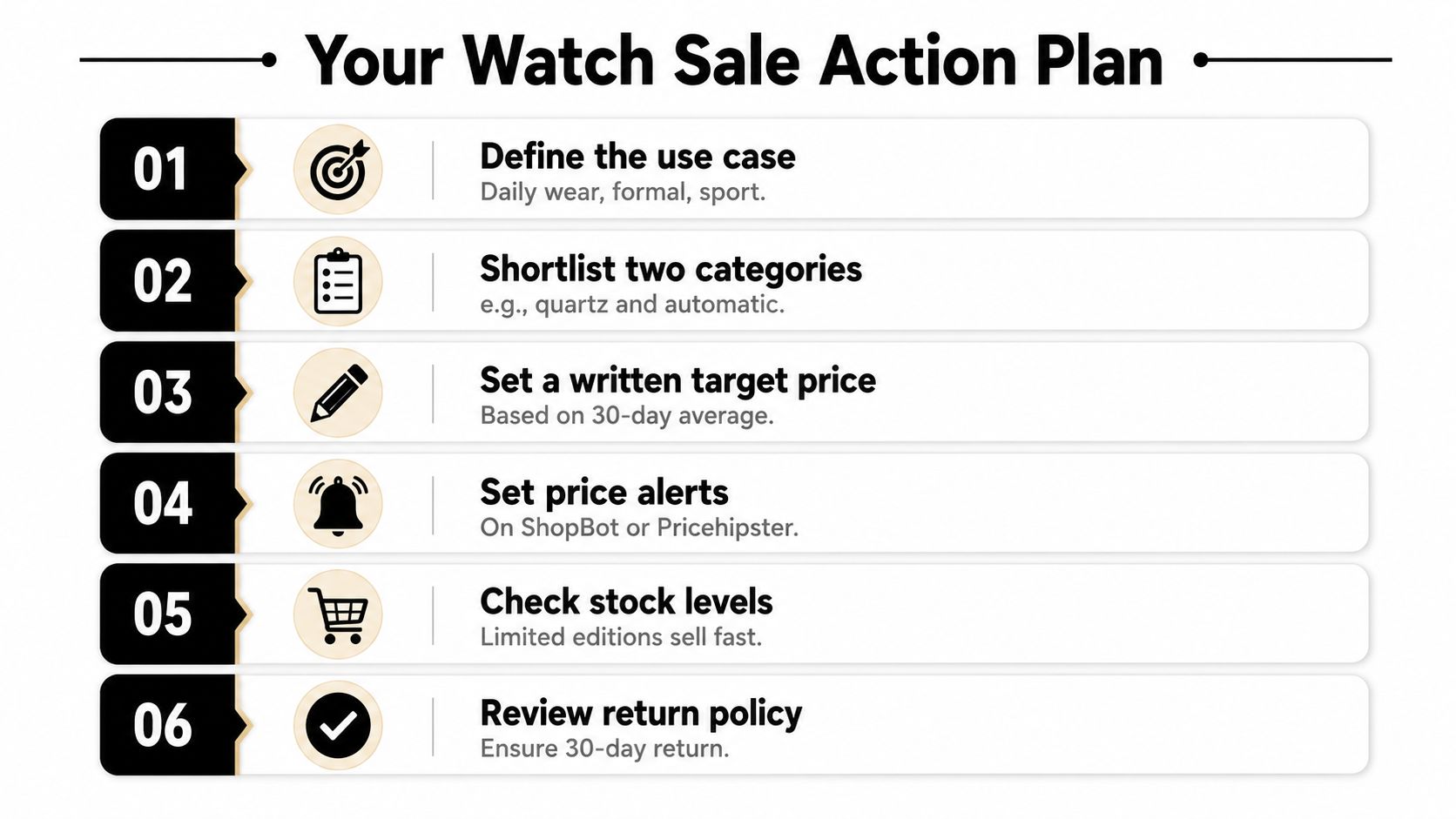
Start with the use case, daily wear, formal, sport, or collector piece. Then shortlist two categories only, because chasing all three at once makes you sloppy. Set a written target price based on history, not on how loud the banner looks.
After that, verify the RRP with at least three sources, then run the authentication and warranty checks before you pay. Log the serial number, purchase date, discount margin, retailer name, and return terms in a simple tracker so the next sale is easier to judge. That record becomes your own price history, and that's where smarter buying starts.
Print this before the next sale: RRP checked, serial confirmed, warranty understood, return policy read, payment protection ready, servicing plan noted.
Special8 pulls together watch deals from across Australia, so it's handy when you want to compare a real sale against the noise without bouncing between dozens of tabs. If you're chasing a smarter watches sale, visit Special8 and use it to check which discounts are genuine before you buy.


