
Accessories Sale: How to Spot the Best Deals in Australia

You're in Sydney, six tabs open and a coffee going cold. Myer, David Jones, a brand outlet, and a deal hub are all showing handbags, jewellery, sunglasses and wallets with red sale labels, but the biggest percentage isn't necessarily the best buy. Australian accessories retail is substantial, with the relevant ABS historical series reaching A$1,161.4 million in 2024, compared with A$1,155.4 million in 2023, so competition for desirable markdowns is real, not imagined (Australian fashion accessories market data).
The sensible approach is simple. Decide what you need, compare the final price rather than the headline discount, check materials and returns, then use alerts so you're ready when the right item drops. If earrings are on your list, start with this practical guide to an earrings sale in Australia, then apply the same discipline to every other accessory category.
Table of Contents
- Picture the Perfect Accessories Sale
- What Counts as an Accessory on Sale
- When Australian Accessories Sales Actually Hit
- Where to Find the Best Accessories Sale Deals
- Setting Up Smart Alerts and Wishlists
- Mistakes That Turn a Sale Win Into a Regret
- Your Accessories Sale Game Plan
Picture the Perfect Accessories Sale
A good accessories sale doesn't begin with frantic scrolling. It begins with a short list, a price ceiling and a clear idea of what will earn space in your wardrobe.
Australian shoppers already spend heavily across fashion, footwear and personal accessories. The ABS series rose from A$576.8 million in 2008 to A$730.0 million in 2013, then reached A$851.4 million in 2020 and A$1,067.7 million in 2021 (Australian fashion accessories market data). That long-running demand explains why sale pages fill quickly, particularly when a colour, shape or recognisable label becomes desirable.
Start with the gap, not the discount
Write down the role the item must play. A black leather tote for work, small gold-tone earrings for everyday wear and square-frame sunglasses for summer are useful briefs. “Anything under a big discount” isn't a brief, it's an invitation to buy something you'll stop wearing.
Then compare like with like. A structured tote should be judged against other structured totes, not against a tiny evening bag with a larger advertised reduction. Look at dimensions, closure, strap length, lining and the material before deciding that one red sticker beats another.
Practical rule: If you can't name at least three occasions for wearing or using an accessory, leave it in the tab.
Australian online fashion-accessories sales are projected to reach US$727.2 million in 2025, with a projected 9.1% CAGR through 2029, according to Australia Post's e-commerce reporting (Australia Post e-commerce report). That digital momentum makes browsing convenient, but it also makes impulse buying effortless.
Close the extra windows. Keep only the retailers carrying pieces that meet your brief, and record the full price, sale price, colour and return terms. The best accessories sale result feels less like winning a race and more like making a well-timed purchase you'd still choose without the red banner.
What Counts as an Accessory on Sale
Retailers use “accessories” broadly. The core category includes handbags, totes, wallets, belts, watches, fine jewellery, fashion jewellery, sunglasses, scarves, hair accessories and small leather goods. Tech cases can sit in the same shopping mission when they're designed as style items rather than generic protective equipment.
Some products sit in grey areas. Shoes are usually treated as footwear, fragrance belongs to beauty, and activewear often appears under apparel, but sale hubs may place them beside accessories when the promotion covers a wider range. Check the product category and returns terms rather than relying only on the sale-page heading.
Prioritise the pieces with repeat use
Treat daily-use items as the priority group. A work tote, durable wallet, practical sunglasses case or simple watch can justify a sale purchase because the item solves a recurring need. Trend-led hair clips, novelty bags and statement jewellery belong in the optional group unless you already know how you'll style them.
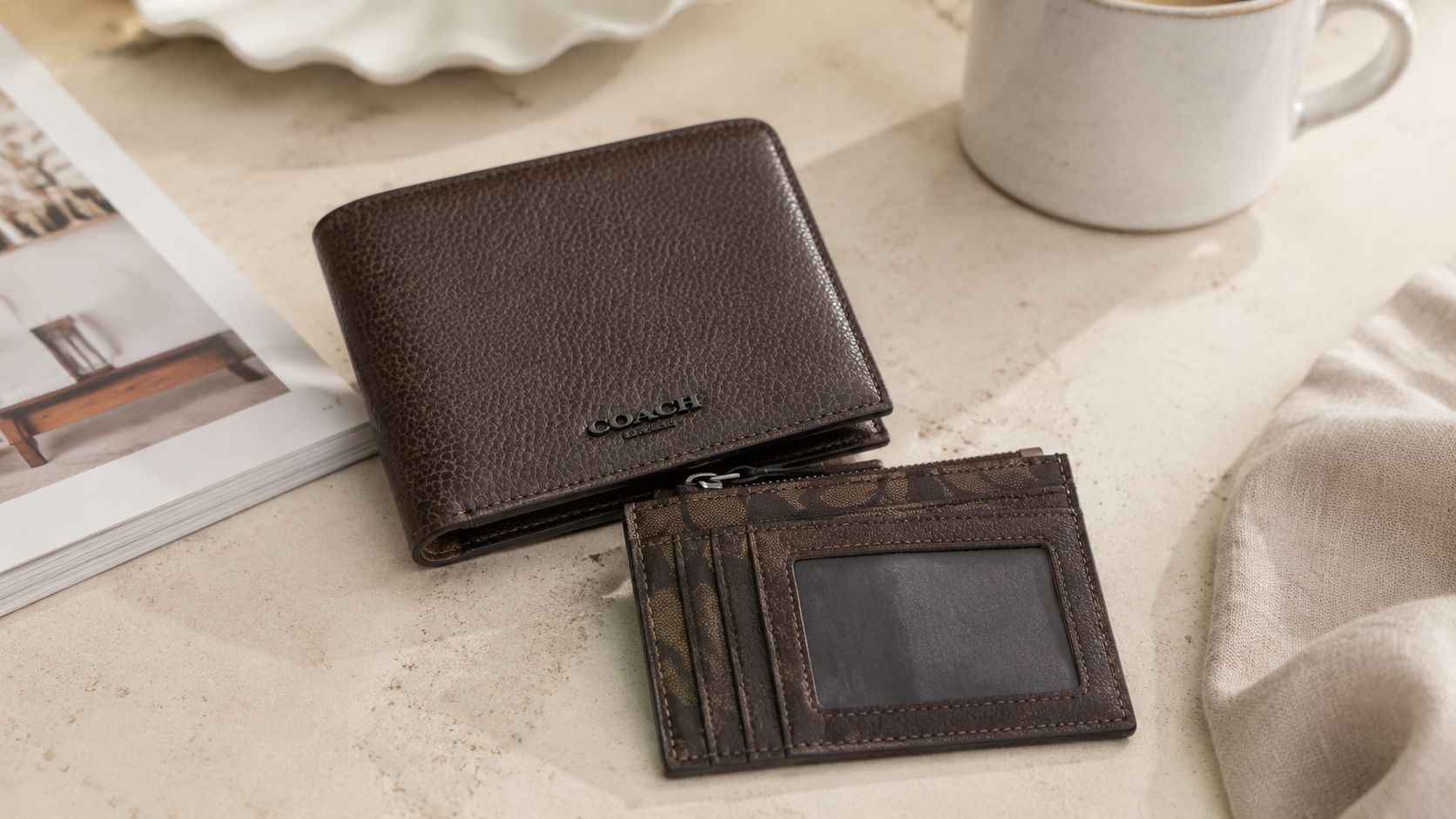
For a concrete example, 2 In 1 Wallet In Blocked Signature Canvas (Im/Sand/Tan) has signature coated canvas and smooth leather, eight credit card slots, a full-length bill compartment, open pockets and a removable card case with an ID window and zip pocket. Its stated dimensions are 12.5cm by 9cm by 1.5cm, with a snap closure.
Why collection links matter
A collection-link aggregator brings sale discovery into one organised feed. Shopify's documentation describes the list-collections template as the collection list page at the store's /collections route (Shopify collection templates). Shopify collection URLs can also carry active filters, including price filters, as shown in a community example (Shopify filtered collection links).
Special8 uses collection links to aggregate tagged sale items across 230+ Australian stores, allowing shoppers to narrow results by category, brand or sale event instead of opening every retailer's sale page. Retailers typically tag products by collection, category or promotion status, so the quality of the feed depends on how accurately those tags and stock details are maintained.
For a broad starting point, browse a tote bag sale, then narrow by material, size and intended use.
When Australian Accessories Sales Actually Hit
Timing matters because accessories move through different stock cycles. Sunglasses and seasonal bags can become stale when the weather or silhouette changes, while watches and classic leather goods often remain relevant for longer. Retailers therefore have different reasons to discount each category.
The first useful window arrives before Christmas. Mid-November promotions can appear when retailers want to stimulate gift shopping and clear stock before the main holiday rush. Boxing Day and New Year clearances are more aggressive because stores need to move end-of-season inventory and create room for incoming ranges. A well-timed Boxing Day sale can be particularly useful for bags, sunglasses, jewellery sets and giftable small leather goods.
Circle the major Australian windows
EOFY sales in June are another strong period for discretionary purchases. Accessories work well here because shoppers can choose a considered personal item or gift without committing to a large wardrobe refresh. The category can react quickly to promotion changes. In June 2025, clothing, footwear and personal accessory retailing rose 1.5% month-on-month to $47.0 million in seasonally adjusted terms, according to the cited retail series (Australian retail sales data).
July brings Mid-Year Stocktake sales, with retailers clearing lines that didn't move during the first half of the year. Victorian and NSW shoppers may see different local promotional rhythms because public holidays, shopping-centre events and store calendars vary by state, so don't assume a national campaign starts or ends everywhere at the same time.
European fashion houses commonly refresh markdowns around January and July, following northern-hemisphere seasonal cycles. That's a useful cue for premium accessories, but it's not a guarantee that every colour or size will remain available.
The smart timing rule: Buy the timeless shape when the price becomes compelling. Wait longer on fast-trend sunglasses or bags if you're chasing the deepest cut, because those categories can receive further reductions once demand cools.
Smaller-ticket accessories also respond strongly to price changes. A modest percentage reduction can still make a noticeable dollar difference, but only if the original comparison price is genuine. Judge the final amount against quality, use and alternative retailers, not the banner alone.
Where to Find the Best Accessories Sale Deals
No single channel wins every time. Brand websites offer the cleanest source and the most reliable product information, while department stores provide breadth. Outlet centres can produce deep reductions, but shoppers need to understand the difference between past-season stock and lines made specifically for outlet distribution. Aggregators widen the search and make comparison easier, though they add another layer between you and the retailer.
| Channel | Typical discount | Selection | Authenticity | Best for |
|---|---|---|---|---|
| Brand websites | Varies by clearance stage | Focused seasonal range | Direct from the label | Shoppers who know the brand and model |
| Department stores | Varies by promotion and membership offer | Broad multi-brand selection | Established retailer channels | Comparing labels in one place |
| Outlet centres | Varies by stock and outlet range | Past-season and outlet-focused lines | Check the retailer and product details | Hunting for reduced branded basics |
| Deal aggregators | Varies across participating stores | Broad category and brand coverage | Follow the linked retailer's details | Discovering and comparing many offers |
Brand websites from labels such as Status Anxiety, Mimco and Sheike are useful when you already know the design you want. Their clearance pages can have strong seasonal depth, but the most substantial reductions often appear late, when colour and size choice is narrower. Department stores such as Myer, David Jones and The Iconic give you more labels under one roof, although member pricing, vouchers and layered promotions can make saving difficult to calculate.
Outlet centres around Sydney, Melbourne and DFO parks deserve careful inspection. A deep ticket reduction may apply to last-season stock, but it can also apply to a made-for-outlet line with different materials or construction. Read the product description and compare the item with the brand's main range.
For premium pieces, use a focused guide to designer handbags on sale in Australia, then verify the final product page, seller, delivery terms and returns policy before paying.
Special8 aggregates collection links from 230+ Australian stores, so it's useful when breadth and price comparison matter more than browsing one label at a time. The trade-off is that you still need to assess each linked retailer's terms, product details and post-purchase support.
Setting Up Smart Alerts and Wishlists
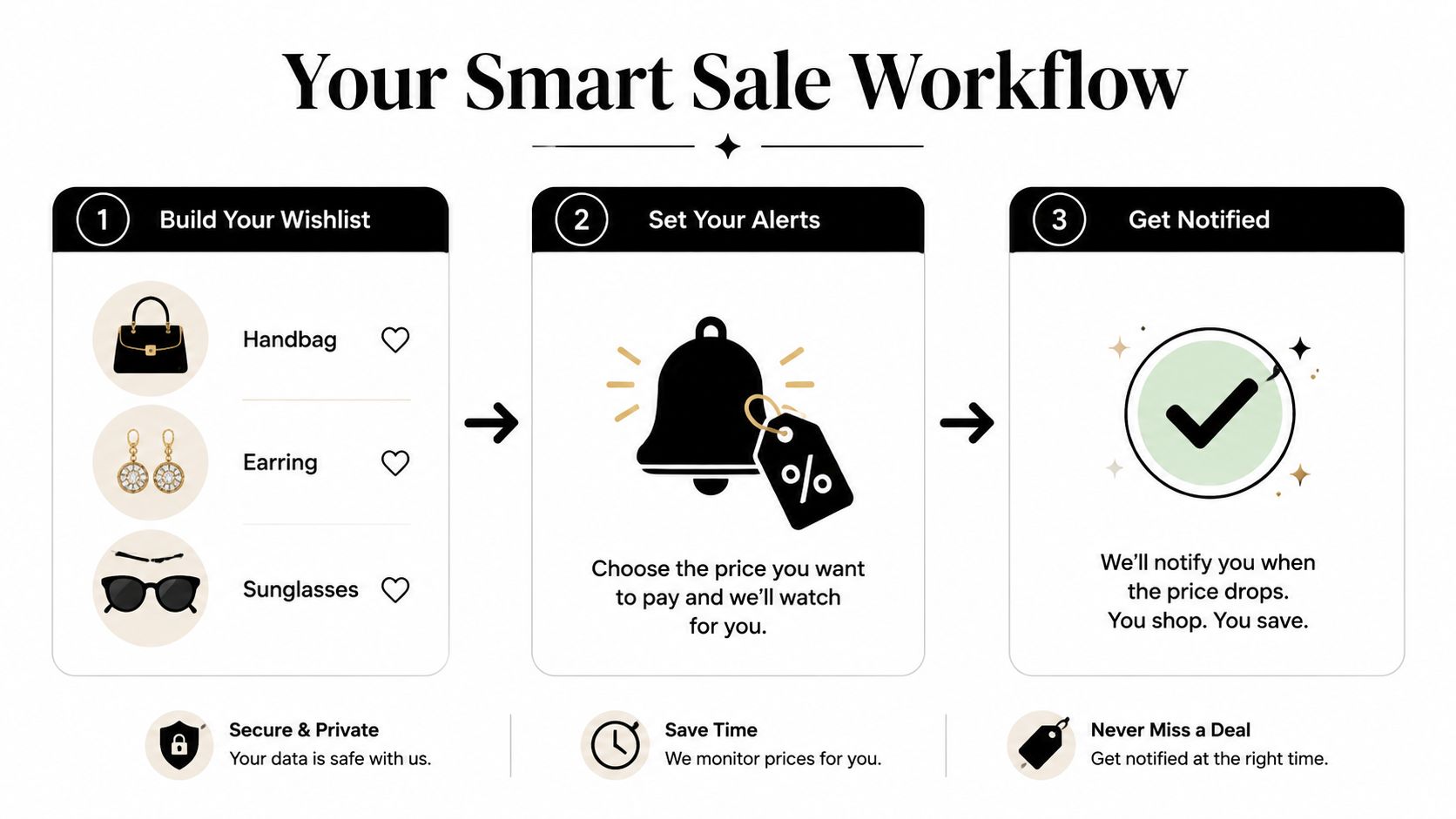
Sale shopping works better as a workflow than as an endless scroll. Start with the accessories you already wear: leather totes, gold-tone earrings, square-frame sunglasses, compact wallets or a watch that fits your daily wardrobe. A wishlist gives every alert a job.
Build a price ceiling
Record the item, the retailer, the first date you saw it and the highest amount you're prepared to pay. Add a brief reason for wanting it, such as “replaces damaged work bag” or “works with most winter outfits”. This stops a limited-time message from turning a vague want into an unnecessary order.
Collection links can make the list easier to manage. On Special8, use the /collections structure to filter sale discovery by price band, brand and category. You can work with ranges such as $50–$150, $150–$400 and $400+, then remove categories you don't buy. The fixed /collections/all path is also commonly used for an all-products collection destination (Shopify all-products collection path).
Layer alerts without creating noise
Follow the specific Australian retailers and brands that stock your wishlist. Email and SMS alerts can catch short promotions, while Instagram and TikTok notifications may surface flash drops that never receive a prominent homepage placement. Google Alerts can help with discontinued lines, which often become more heavily marked down once a retailer wants to clear the remaining stock.
Keep the system small. Too many alerts create fatigue, and fatigue makes shoppers ignore the message that matters. Review the list quarterly, delete items you no longer want and update your ceiling when your needs change.
For broader sale discovery, an online clothing sale page can be useful when an accessories promotion is bundled with apparel or a seasonal campaign. Open the actual product page before buying, because an alert tells you that something changed, not whether it suits you.
Mistakes That Turn a Sale Win Into a Regret
A large percentage off doesn't prove value. The original ticket can be a poor comparison point, particularly when the product has been sitting through repeated promotions or the retailer has changed the displayed reference price. Check the brand's regular product page, compare other Australian retailers and use a price-history tool where one is available.
The ACCC specifically warns shoppers to assess sale pricing carefully, including whether a claimed saving gives a misleading impression (ACCC pricing guidance). The number that matters is the amount you'll pay for a product you want, not the largest red figure beside it.
Three traps deserve an automatic pause
A micro-baguette bag may look exciting at a reduced price, but a fast-moving silhouette can become difficult to style once the trend cools. A lower resale market also matters if you expect to pass the item on later. Choose a trend piece only when the design works with clothes you already own.
Material shortcuts hide behind attractive sale labels. Bonded leather, brass-plated base metal and acetate described with overly technical optical language all deserve closer inspection. Read the materials list, look for care instructions and check close-up photographs before judging the item.
Use this pre-buy checklist:
- Verify the price history: Compare the stated original price with the brand site and competing retailers.
- Estimate cost per wear: Ask how often you'll use the piece and whether it fills a real wardrobe gap.
- Inspect the materials: Check the fibre, leather, metal, lens and lining descriptions instead of relying on the product title.
- Read the return window: Sale conditions may affect change-of-mind returns, so know the process before checkout.
- Confirm the purpose: If you can't explain exactly where the accessory fits into your life, don't buy it.
A sale rewards discipline, not speed. The strongest purchase is the one that remains useful after the promotional banner disappears.
Your Accessories Sale Game Plan
Before you click buy, run five checks. They take less time than arranging a return and give you a record if the retailer later changes the product page.
- Confirm the reduction. Compare the original RRP with the brand's own site or another authorised retailer. Treat a dramatic percentage with suspicion until the final price makes sense.
- Verify the seller. Check the business name, contact details, product page and payment process. If an aggregator links you to a retailer, complete this check on the retailer's site.
- Read sale returns terms. Separate change-of-mind rules from rights for faulty, unsafe or misdescribed goods.
- Set your personal ceiling. Decide the maximum you'll pay before the countdown timer or low-stock message appears.
- Save evidence. Screenshot the product page, description, displayed price, URL and timestamp before placing the order.
Know what Australian law protects
The ACCC states that sale and clearance items remain covered by Australian Consumer Law consumer guarantees. If an accessory is faulty, doesn't match its description or isn't fit for its intended purpose, the retailer may need to provide a repair, replacement or refund, even when the item was discounted (ACCC faulty fashion guidance).
That protection matters because Australian fashion, footwear and accessories spending reached $4.08 billion in August 2025, up $74.3 million year-on-year, according to the cited ACCC material. A sale purchase still deserves careful documentation. Keep the receipt, order confirmation, photographs of the fault and your messages with the retailer.
Your final prompt should be short: Is this on my wishlist? Is the price below my ceiling? Have I checked the seller, materials and returns? Does it fall into a useful window such as EOFY, Mid-Year, Boxing Day or an end-of-season brand clearance? If the answer is no, leave it. An unplanned accessory is the fastest way to turn a discount into clutter.
Special8 brings sale discovery from fashion, footwear, accessories, jewellery and lifestyle retailers into one Australian shopping destination, with collection links that help you browse by category, brand or sale event. Visit Special8 to check current accessories deals, compare options across participating stores and set your next purchase against a clear wishlist and price ceiling.


